Winter Tree Care Tips for New River Valley Homeowners
Winter in the New River Valley is hard on trees. Here is how to protect your trees from ice, snow, and cold — and what to watch for when spring arrives.
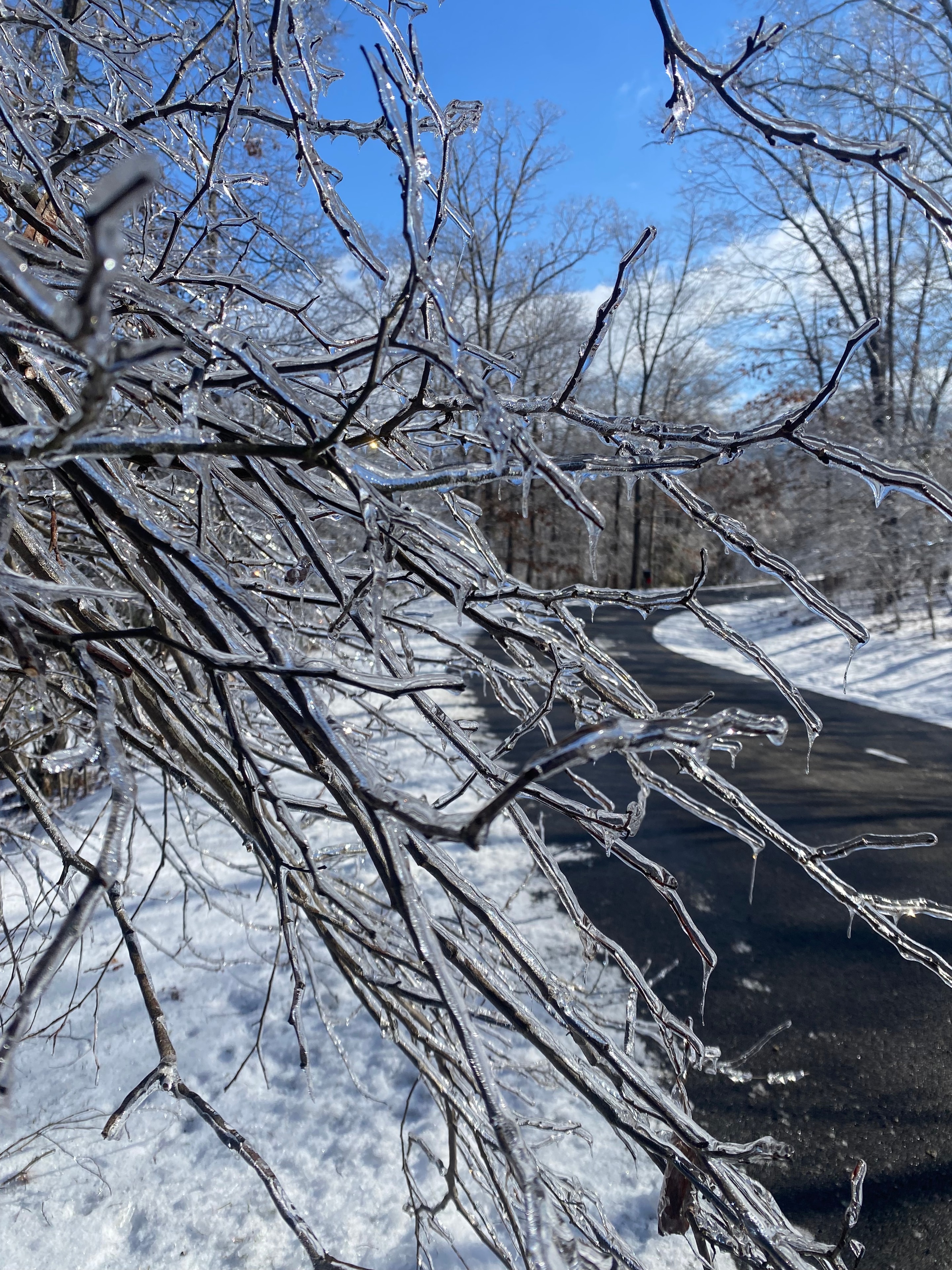
Winter in the New River Valley is beautiful — and hard on trees. Ice storms, heavy snow, freeze-thaw cycles, and cold desiccating winds all take a toll. The good news is that a little preparation goes a long way.
Here's what working through New River Valley winters has taught us about what trees actually need — and what most homeowners overlook.
Why Winter Is Tough on New River Valley Trees
Our region sits at the intersection of several weather patterns that make winter particularly challenging for trees:
- Ice storms — the New River Valley is prone to ice storms, and some winters bring multiple events. Ice is far more damaging to trees than snow because it's heavier and coats every surface.
- Freeze-thaw cycles — temperatures that swing above and below freezing repeatedly can cause bark to crack (called "frost cracking") and can damage roots near the soil surface.
- Late-season heavy snow — wet, heavy snow in October or March can load branches beyond their capacity, especially on trees that still have leaves.
- Winter drought — cold, dry winds can desiccate evergreen foliage, especially on newly planted trees.
Before Winter: What to Do Now
Remove Hazardous Branches Before the First Ice Storm
The single most important thing you can do before winter is remove dead, weak, or structurally compromised branches before ice and snow load them. A branch that might survive a summer storm can fail catastrophically under a half-inch of ice.
Look for:
- Dead branches (no leaves in summer, no buds now)
- Branches with included bark or weak attachments
- Codominant stems (two main trunks of equal size)
- Branches hanging over your roof, driveway, or power lines
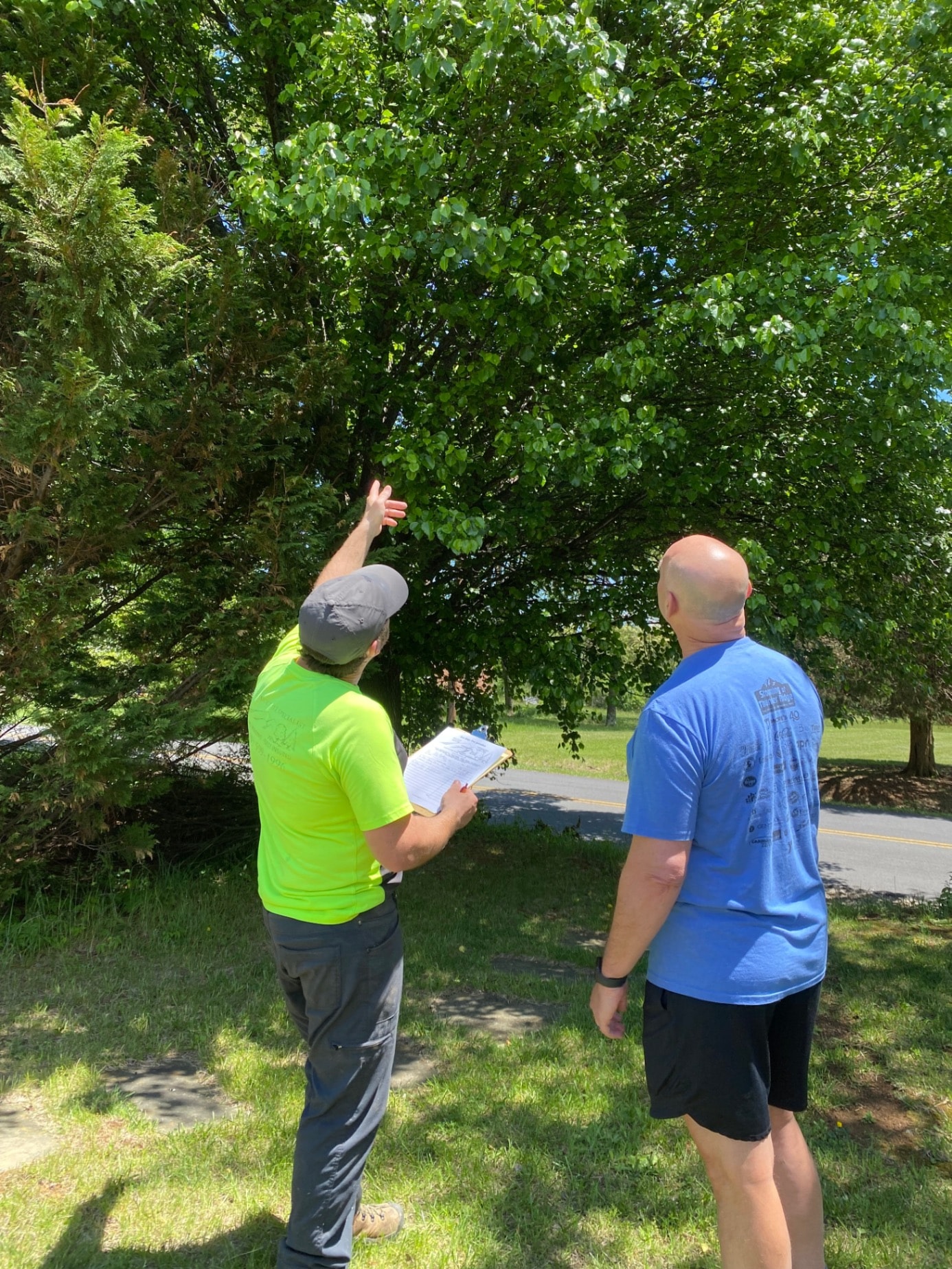
If you're not sure what you're looking at, call us for a free assessment before the weather turns.
Cable or Brace Vulnerable Trees
If you have a tree with a codominant stem or a large branch with a weak attachment, cabling or bracing can significantly reduce the risk of failure under winter loads. This is a job for a certified arborist — improperly installed cables can actually increase failure risk.
Mulch Around the Root Zone
A 3-4 inch layer of mulch around the base of your trees (keeping it away from the trunk itself) helps insulate the root zone from freeze-thaw cycles and retains moisture. This is especially important for trees planted in the last 3-5 years.
Water Evergreens Before the Ground Freezes
Evergreens continue to lose moisture through their needles all winter, but once the ground freezes they can't replace it. A deep watering before the ground freezes — during a dry fall when soil is still workable — helps evergreens enter winter with adequate moisture reserves. The right timing depends on conditions that year, not a fixed date.
During Winter: What to Watch For
After an Ice Storm
Ice storms are the most damaging winter weather event for trees in our area. After an ice storm:
- Don't shake ice off branches. It seems counterintuitive, but shaking ice-loaded branches can cause them to snap. Let the ice melt naturally.
- Stay away from ice-loaded trees. Branches can fall without warning as ice shifts or melts unevenly.
- Document any damage before cleanup for insurance purposes.
- Call a professional for any branches near structures, power lines, or anywhere people walk.
Heavy Snow
For snow on large branches or anything overhead, leave it alone. Branches under snow load can spring back or break unexpectedly, and working under loaded branches is dangerous. If you're concerned about a specific tree, call a professional rather than attempting to clear it yourself.
Frost Cracks
Frost cracks are vertical splits in the bark caused by rapid temperature changes — warm days followed by very cold nights. They're most common on the south and southwest sides of trees, which warm up most in winter sun.
Frost cracks look alarming but are usually not fatal. Trees may partially compartmentalize the wound over time, though the crack doesn't necessarily close completely. They can be entry points for disease and insects, so it's worth having them evaluated.
After Winter: Spring Assessment
When spring arrives, walk your property and look for:
- Branches that didn't leaf out — these may have been killed by winter cold or ice damage
- New cracks or splits in trunks or major branches
- Bark that's loose or falling off — this can indicate winter injury or disease
- Leaning that wasn't there before — may indicate root damage from frost heaving
- Salt damage — if you use road salt near trees, look for browning on the side facing the road
Winter damage isn't always visible until the tree tries to leaf out in spring. If something looks off, call us for an assessment before the problem gets worse.
A Note on Salt Damage
Road salt and de-icing products are hard on trees. Salt spray from roads can damage foliage and bark, and salt that washes into the root zone can disrupt water uptake and cause root damage.
If you have trees near a salted road or driveway:
- Use sand or gravel instead of salt where possible
- Flush the root zone with water in early spring to dilute salt accumulation
- Consider salt-tolerant species if you're planting new trees near a road
Free Winter Tree Assessments in the New River Valley
If you have trees you're uncertain about — ones that took ice damage last year, or mature trees close to the house — fall is the right time to have them looked at. We serve Blacksburg, Christiansburg, Radford, Salem, and the surrounding New River Valley.
Call (540) 951-1458 to schedule a free assessment before winter sets in.
Explore Topics
Written by
Blue Ridge Tree Specialists
Written by the Blue Ridge Tree Specialists team, drawing on more than four decades of local tree-care experience in the New River Valley.