Tree Cabling and Bracing: When It Makes Sense and What to Expect
Not every structurally weak tree needs to come down. Learn how cabling and bracing works, which trees are good candidates, and what the installation process looks like.
A large oak with a split trunk. A mature maple with two co-dominant stems leaning in opposite directions. A beloved shade tree with a heavy limb hanging over the back deck. These are the trees homeowners call us about most — not because they want them removed, but because they want to keep them.
Cabling and bracing is one of the most valuable tools in a certified arborist's kit. When done right, it can reduce the risk of structural failure and help preserve a tree that would otherwise need to come down — though no support system eliminates the possibility of failure entirely. Here's what you need to know.
What Is Tree Cabling and Bracing?
Cabling and bracing are two related but distinct techniques for providing structural support to trees with weaknesses that could lead to failure.
Cabling involves installing high-strength steel or synthetic cables between two or more stems or major branches to limit how far they can move apart. The cable doesn't hold the tree rigid — it allows natural movement while preventing the kind of extreme separation that causes a split or failure under load.
Bracing uses threaded steel rods installed through a split union, crack, or weak crotch to hold the wood together and prevent further splitting. Bracing is typically used in combination with cabling for more severe structural issues.
Together, these systems redistribute stress across the tree's structure, reducing the load on any single weak point.
Which Trees Are Good Candidates?
Not every tree with a structural weakness is a good candidate for cabling and bracing. The right candidate is a tree that:
- Has significant value — mature shade trees, historic trees, trees with sentimental significance, or trees that provide substantial property value
- Is otherwise healthy — cabling and bracing supports structure, not health; a tree with advanced decay, disease, or root damage may not be a good candidate
- Has a specific, addressable weakness — co-dominant stems, included bark, a split union, or a heavy overhanging limb with a weak attachment
- Is not in imminent danger of total failure — if a tree is already failing, cabling may not be sufficient
Common situations we see in the New River Valley:
- Co-dominant stems — two main trunks of roughly equal size growing from the same point, often with included bark between them. This is one of the most common structural weaknesses in hardwoods like oaks, maples, and tulip poplars.
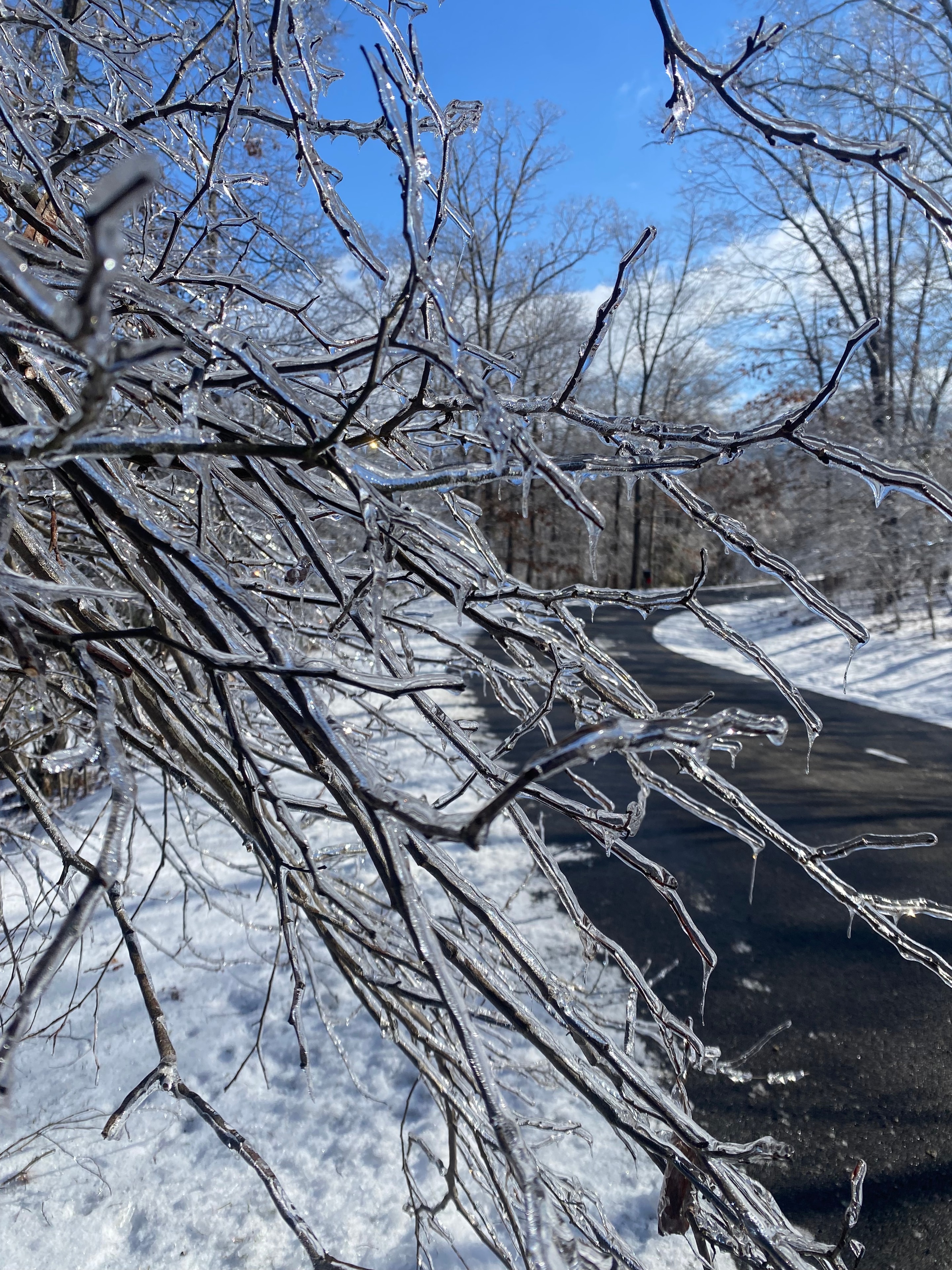
- Split unions — a crack or split at the point where two major stems meet, often caused by ice storms or wind events
- Heavy overhanging limbs — large limbs with long horizontal reach and a relatively small attachment point, especially over structures
- Previously damaged trees — trees that have already experienced partial failure and need support to prevent further damage
What the Installation Process Looks Like
A cabling and bracing installation typically follows this sequence:
1. Assessment
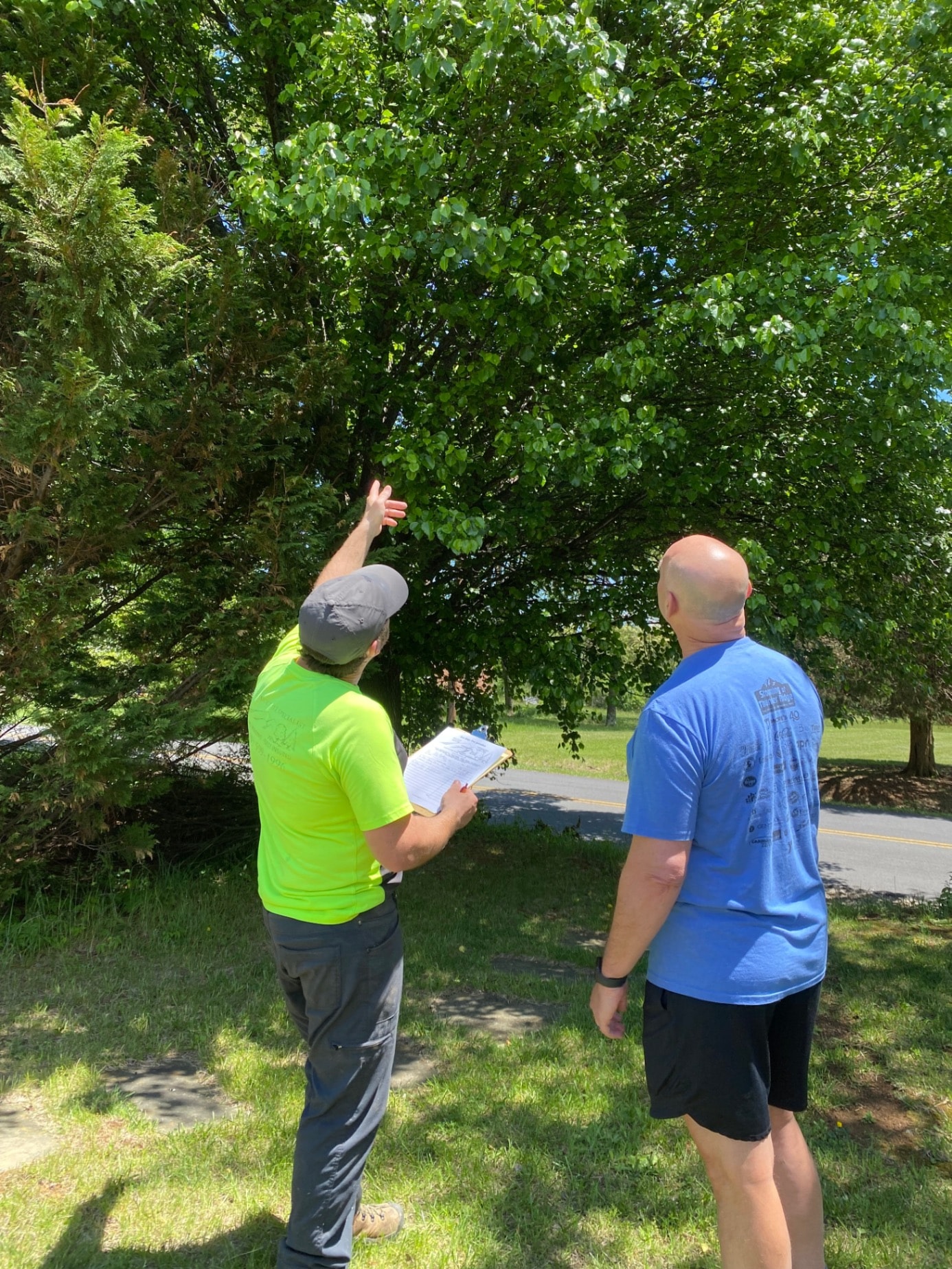
An ISA-certified arborist walks the tree and evaluates the structure, the specific weakness, the tree's overall health, and the risk to people and property. This assessment determines whether cabling is appropriate, where the cables should be installed, and what hardware is needed.
We provide this assessment free of charge. If cabling isn't the right solution, we'll tell you — and explain what is.
2. Hardware Selection
The type of cable or rod used depends on the application. High-strength steel cables are the traditional choice for most installations. Cobra is one branded synthetic support system that uses flexible, high-strength webbing. Synthetic systems generally allow more natural movement than steel cable and are often preferred for younger trees or situations where aesthetics matter.
3. Installation
For steel cable systems, our arborists climb the tree and install eye bolts through the stems at the appropriate height. Placement is determined by the tree's structure, the location of the weakness, and the support system being used — there's no single formula that applies to every tree. The cable is tensioned to allow natural movement while limiting extreme separation.
For bracing rods, holes are drilled through the split or cracked wood and threaded rods are installed with washers and nuts on each side.
The installation typically takes a few hours for a single-cable system and a full day for complex multi-cable or combined cable-and-brace installations.
4. Follow-Up Inspections
Cables and braces are not install-and-forget systems. We recommend regular inspections to check tension, hardware condition, and whether the tree's growth has changed the dynamics of the support system. Cables that are too tight can girdle a stem as the tree grows; cables that have gone slack no longer provide meaningful support.
How Long Does Cabling Last?
Service life varies depending on the hardware used, the installation method, how the tree grows, and how consistently the system is maintained. A well-maintained system can last many years, but there's no universal lifespan that applies to every installation. Regular inspections catch issues — loose hardware, girdling, changed load dynamics — before they become problems.
An important note: Cabling and bracing can reduce structural risk, but they do not eliminate the possibility of failure. Trees with support systems require ongoing monitoring, and some situations still call for removal. This is consistent with ISA guidance, which explicitly states that support systems are not guarantees against failure.
Cabling vs. Removal: How to Decide
The honest answer is that it depends on the tree and the situation. Here's how we think about it:
Cabling makes sense when:
- The tree is healthy and has significant value
- The weakness is specific and addressable
- The cost of cabling is justified by the value of the tree
- The risk to people and property is manageable with the support system in place
Removal makes more sense when:
- The tree has advanced decay, disease, or root damage
- The structural weakness is too severe for cabling to adequately address
- The tree is in a location where failure would cause serious harm
- The cost of ongoing maintenance exceeds the tree's value
We'll always give you an honest assessment. If removal is the right answer, we'll tell you. If cabling can save a tree you love, we'll tell you that too.
Free Cabling and Bracing Assessments in the New River Valley
Blue Ridge Tree Specialists has been installing cabling and bracing systems across Blacksburg, Christiansburg, Radford, Salem, and the surrounding New River Valley since 1980. Our ISA-certified arborists have evaluated hundreds of trees and designed support systems for everything from backyard oaks to historic hardwoods.
If you have a tree you're worried about — especially before winter ice and snow loads arrive — call us at (540) 951-1458 for a free assessment. We'll walk your property, evaluate the tree, and give you an honest recommendation.
Explore Topics
Written by
Blue Ridge Tree Specialists
Written by the Blue Ridge Tree Specialists team, drawing on more than four decades of local tree-care experience in the New River Valley.