What Is a Tree Health Assessment and Do You Need One?
A tree health assessment can catch problems before they become emergencies. Here is what our ISA-certified arborists look for and when you should schedule one.
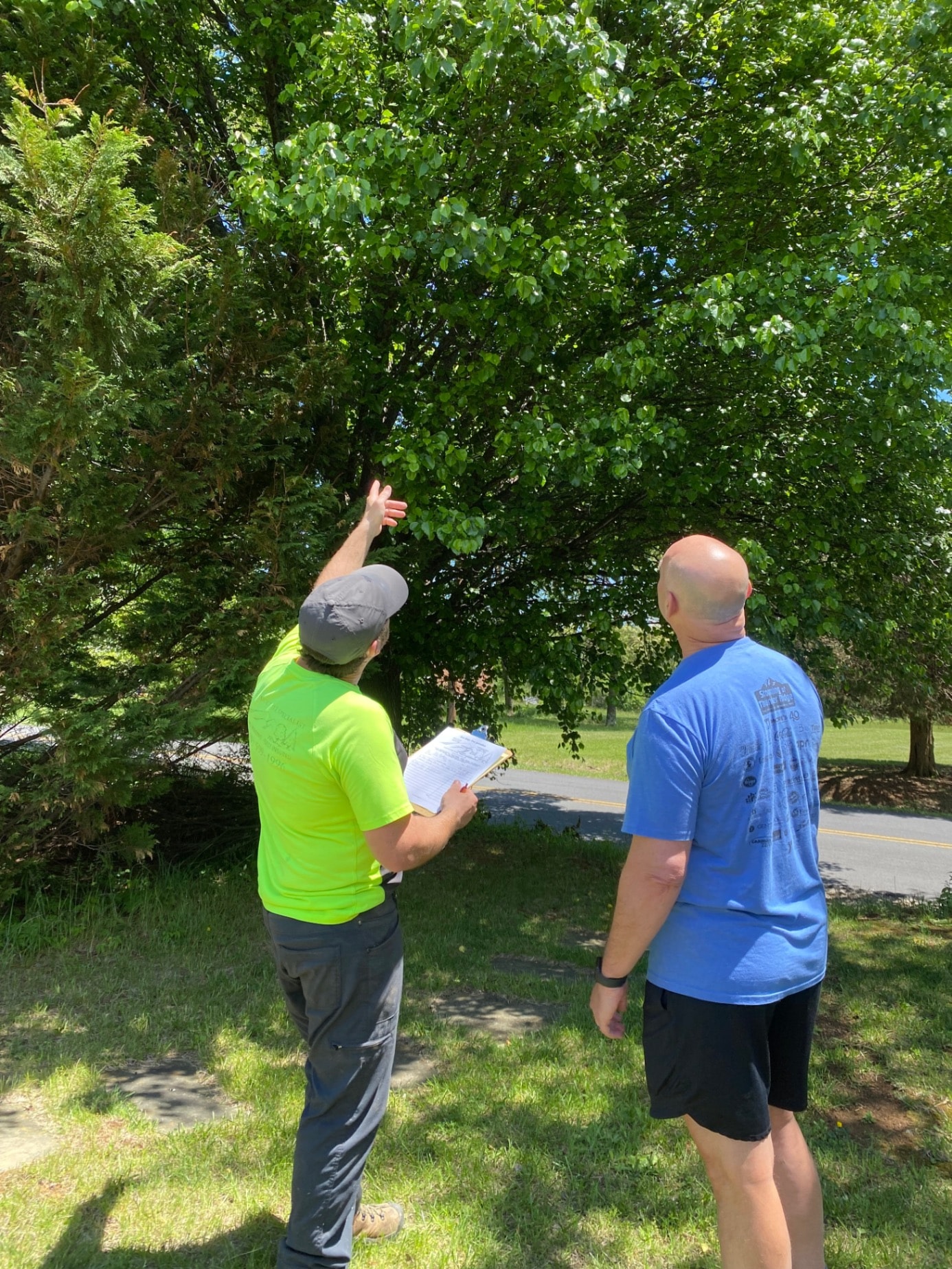
Most homeowners don't think about their trees until something goes wrong — a branch falls, a tree starts leaning, or a storm reveals damage that was there all along. A tree health assessment is how you get ahead of those problems before they become emergencies.
Here's what our ISA & TCIA certified arborists look for during a professional tree assessment, and how to know when it's time to schedule one.
What Is a Tree Health Assessment?
A tree health assessment is a systematic evaluation of a tree's structural integrity, overall health, and risk to people and property. It's performed by a certified arborist who knows what healthy trees look like — and what the early warning signs of decline look like.
An assessment is not just a visual check. A thorough evaluation includes:
- Crown inspection — examining the canopy for dead branches, dieback, leaf abnormalities, and signs of pest or disease activity
- Trunk evaluation — checking for cracks, cavities, fungal growth, bark abnormalities, and signs of internal decay
- Root zone assessment — looking for soil compaction, root damage, heaving, or signs of root rot
- Structural analysis — evaluating branch attachments, co-dominant stems, and overall tree architecture for failure risk
- Site conditions — considering soil type, drainage, proximity to structures, and environmental stressors
What We Look For: The Key Indicators
Crown Dieback
When the top of the tree starts dying back while lower branches remain healthy, it's often one of the first signs of root stress, vascular disease, or systemic decline. We look at the extent of dieback and whether it's progressing.
Codominant Stems
A codominant stem is when a tree develops two main trunks of roughly equal size that grow upward together. The attachment between them is often weak — especially if bark is included in the union — and these are among the most common failure points we see after storms.
Depending on the attachment, the tree's overall condition, and the risk level, cabling or bracing may be an option for some codominant stems — though not all are appropriate candidates.
Included Bark
When bark gets trapped between two branches or stems as they grow together, it creates a weak attachment point. Included bark can often be identified by the shape of the union — a tight, V-shaped crotch with a visible bark ridge pressed between the stems is a common indicator. It significantly increases the risk of branch or stem failure.
Fungal Indicators
Mushrooms, conks (shelf fungi), and other fungal growth on or near a tree can indicate internal decay. Not all fungal growth means structural compromise — the type, location, and extent matter. We identify the species when possible, since some are more aggressive than others, and assess what the growth tells us about the tree's condition.
Pest Activity
The New River Valley has seen significant tree loss from the Emerald Ash Borer, which has killed millions of ash trees across Virginia. We also watch for signs of bark beetles, borers, and other insects that can weaken or kill trees.
Root Zone Conditions
Roots are often the last thing homeowners think about, but they're the foundation of tree health. Soil compaction from construction, grade changes, pavement over roots, and physical root damage are all common causes of tree decline that aren't visible until the tree is already struggling.
When Should You Schedule a Tree Health Assessment?
After a Major Storm
Storm damage isn't always obvious. A tree that looks fine after a storm may have sustained root damage, trunk cracks, or branch splits that aren't visible from the ground. We recommend a post-storm assessment for any large trees near your home.
Before Buying a Home
If you're purchasing a property with mature trees, a tree assessment is a smart investment. Large trees add significant value to a property — but they can also be a significant liability if they're in decline.
When You Notice Changes
Any of these changes warrant a professional look:
- Leaves that are smaller, fewer, or discolored compared to previous years
- Branches that didn't leaf out this spring
- New cracks, splits, or cavities in the trunk
- Fungal growth anywhere on the tree
- A lean that wasn't there before
- Soil heaving or cracking around the base
Periodic Assessments for Mature Trees
Even if your trees look healthy, periodic assessments by a certified arborist are good preventive care — especially for mature trees near your home, driveway, or other structures. The right interval depends on the tree's age, species, history, and site conditions; your arborist can recommend a schedule based on what they find.
What Happens After the Assessment?
After evaluating your trees, we'll give you a clear, honest recommendation. The options typically include:
- No action needed — the tree is healthy and low-risk
- Monitoring — the tree has some concerns but is not an immediate hazard; we'll recommend a follow-up timeline
- Pruning — removing dead or structurally weak branches to reduce risk
- Cabling or bracing — installing support systems to reduce the risk of failure in codominant stems or weak branch attachments
- Removal — when a tree is dead, severely diseased, or poses an unacceptable risk to people or property
We never recommend removal unless it's genuinely necessary. Our goal is to help you keep your trees healthy and safe for as long as possible.
ISA & TCIA Certified Arborists Serving the New River Valley
Blue Ridge Tree Specialists has been providing professional tree care in Blacksburg, Christiansburg, Radford, Salem, and the surrounding New River Valley since 1980. Our arborists hold ISA certification and our company is TCIA accredited. ISA certification recognizes individual arborists who have demonstrated knowledge of tree care practices; TCIA accreditation is a company-level credential that evaluates business practices, safety, and professionalism.
Call (540) 951-1458 to schedule a free tree health assessment. We'll walk your property, evaluate your trees, and give you honest, expert advice with no pressure and no upselling.
Explore Topics
Written by
Blue Ridge Tree Specialists
Written by the Blue Ridge Tree Specialists team, drawing on more than four decades of local tree-care experience in the New River Valley.