What to Do After Storm Damage to Your Trees
Storm damage can leave your property dangerous and your trees in shock. Here is exactly what to do — and what not to do — after a major storm in the New River Valley.
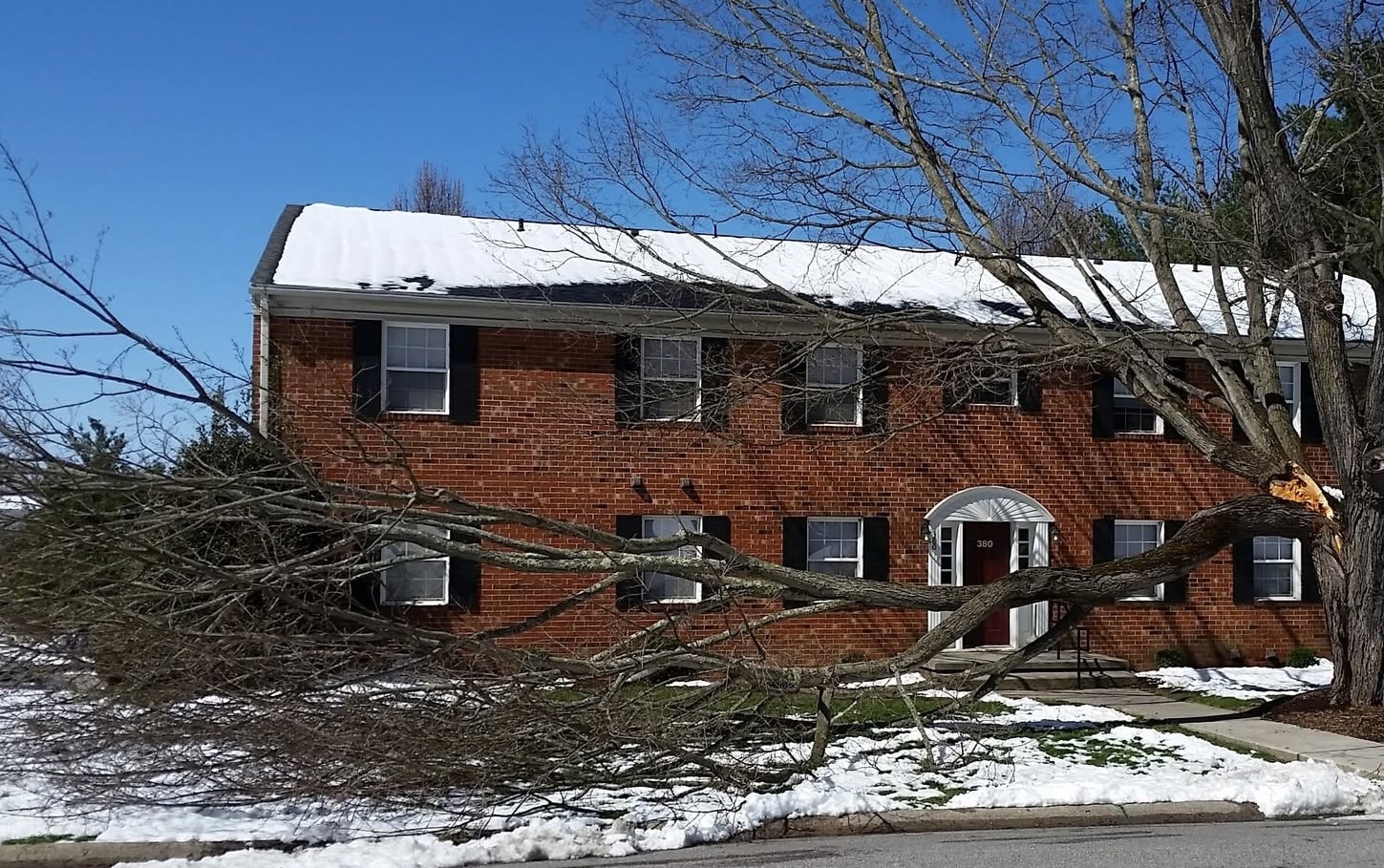
The storm has passed. You walk outside and find a large limb across your driveway, a tree leaning against your roof, or a root ball the size of a car lifted out of the ground. What do you do first?
Storm calls are some of the most urgent work we do — and the situations we see most often are ones that could have been handled more safely with a little advance knowledge. Here's the practical guide we wish every homeowner had before the storm hit.
Step 1: Stay Safe — Don't Touch Anything Yet
Before you do anything else, scan the scene for hazards:
- Downed power lines — if a tree has brought down a power line, stay at least 30 feet away and call Appalachian Power (AEP) immediately at 1-800-956-4237. Never assume a downed line is de-energized.
- Leaning trees — a tree that's partially uprooted or leaning against a structure can shift or fall without warning. Keep everyone away from the area beneath it.
- Hanging branches — "widow makers" are broken branches still caught in the canopy above. They can fall at any time, especially when wind picks back up or another branch shifts.
Your safety comes first. The cleanup can wait.
Step 2: Document Everything for Insurance
Before any cleanup begins, photograph and video everything:
- All damaged trees and branches
- Any property damage (roof, fence, car, outbuildings)
- The full extent of the fallen material
- The base of any uprooted trees (shows root condition)
This documentation is critical for your homeowner's insurance claim. Do it before anything is moved.
Step 3: Call Your Insurance Company
Contact your homeowner's insurance company to report the damage and open a claim. Key things to know:
- Tree removal is often covered if the tree damaged a structure (home, fence, detached garage)
- Cleanup only (no structure damage) may have limited or no coverage depending on your policy
- Ask about emergency services — many policies cover emergency stabilization to prevent further damage
Get a claim number before any work begins so costs can be properly documented.
Step 4: Call a Professional Tree Service
This is not a DIY situation. Storm-damaged trees are among the most dangerous conditions a tree service faces — and that's with professional training, equipment, and safety gear.
Here's why you should not attempt storm cleanup yourself:
- Tension wood — storm-damaged trees and branches are often under extreme tension. A chainsaw cut in the wrong place can cause a log to kick back violently or a branch to spring upward.
- Unstable root systems — a partially uprooted tree can shift or fall while you're working near it
- Hidden hazards — branches caught in the canopy above aren't always visible from the ground
Blue Ridge Tree Specialists is available 24/7 for emergency response throughout the New River Valley. We have the equipment and experience to handle everything from a single fallen limb to a whole-tree removal from a compromised structure.
What We Do in an Emergency Response
When we arrive at a storm damage call, here's our process:
- Safety assessment — we identify all hazards before any cutting begins
- Stabilization — if a tree is leaning against a structure, we stabilize it before removal to prevent further damage
- Systematic removal — we work from the top down, removing branches in sections to control where material falls
- Debris cleanup — we chip and haul all debris, leaving your property clean
- Stump grinding — if the tree is fully removed, we can grind the stump in the same visit
Common Storm Damage Scenarios in the New River Valley
Ice Storms
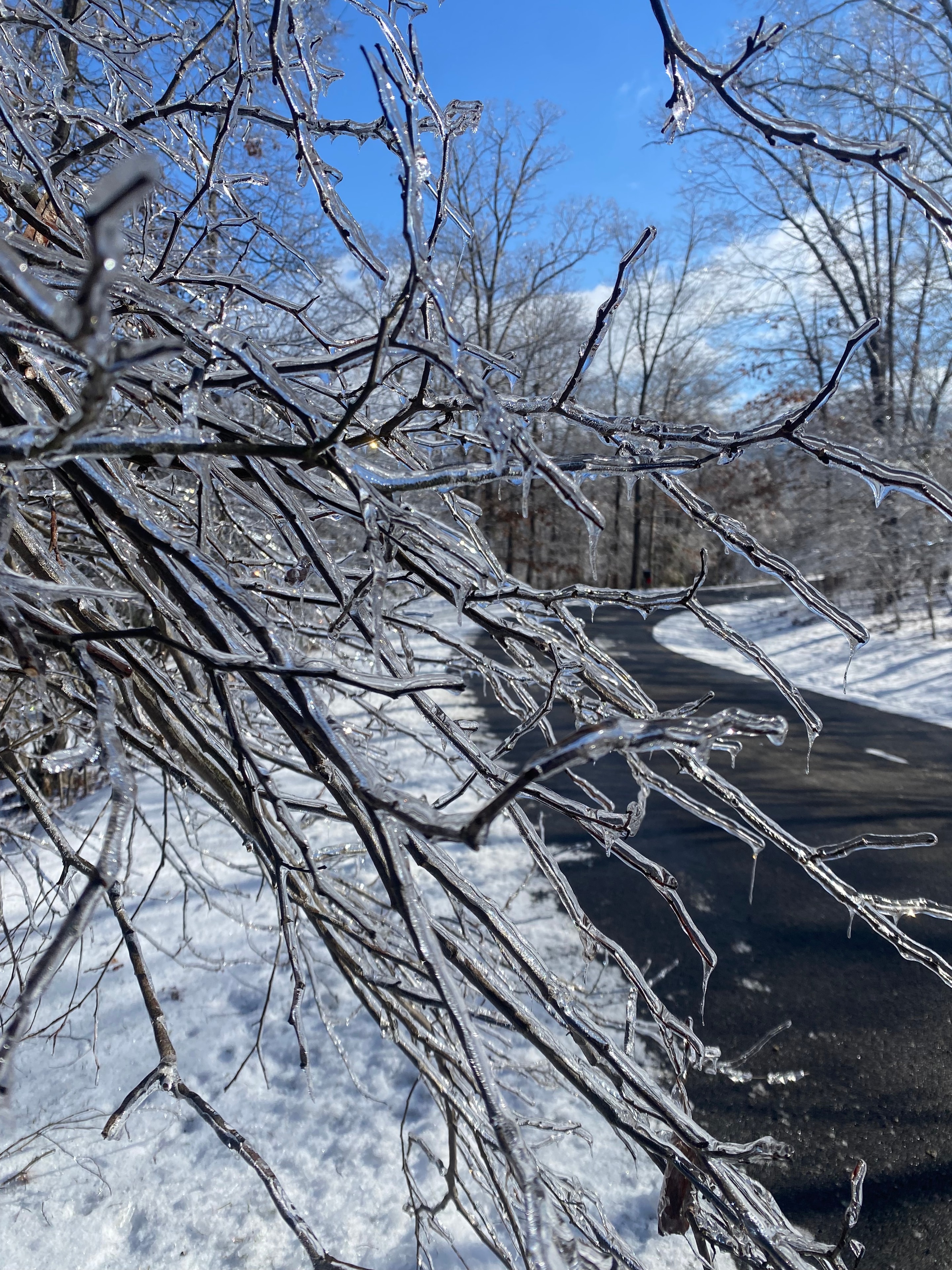
The New River Valley gets significant ice events most winters. Ice accumulation on branches can add hundreds of pounds of weight, causing even healthy trees to fail. After an ice storm, look for:
- Branches bent to the ground but not yet broken
- Splits at major branch unions
- Bark splitting along the trunk
High Wind Events
Straight-line winds and thunderstorm gusts are the most common cause of tree failure in our area. Wind damage tends to be sudden and complete — whole trees uprooted or snapped at the trunk.
Heavy Snow
Wet, heavy snow in early or late season (October and March are common) can load branches beyond their capacity. Evergreens are especially vulnerable because they hold snow on their needles.
After the Emergency: Assess Your Remaining Trees
Once the immediate hazard is cleared, it's worth having your remaining trees assessed. A major storm often reveals structural weaknesses in trees that are still standing — cracks, splits, or root damage that weren't visible before.
Our ISA & TCIA certified arborists can walk your property and identify trees that may need cabling, bracing, or removal before the next storm season.
24/7 Emergency Service Throughout the New River Valley
Blue Ridge Tree Specialists serves Blacksburg, Christiansburg, Radford, Salem, and the surrounding New River Valley. We're available around the clock — call (540) 951-1458 any time.
If you have a tree that came through the storm but doesn't look right, don't wait for the next one to find out. We'll come take a look.
Explore Topics
Written by
Blue Ridge Tree Specialists
Written by the Blue Ridge Tree Specialists team, drawing on more than four decades of local tree-care experience in the New River Valley.